
Chestnuts Roasting on an Open Fire
Any plant that can be planted and then , once established , is productive, especially as food, and requires little or no inputs, qualifies as a Permaculture favorite. Today, I’d like to talk about the Chestnut Tree.
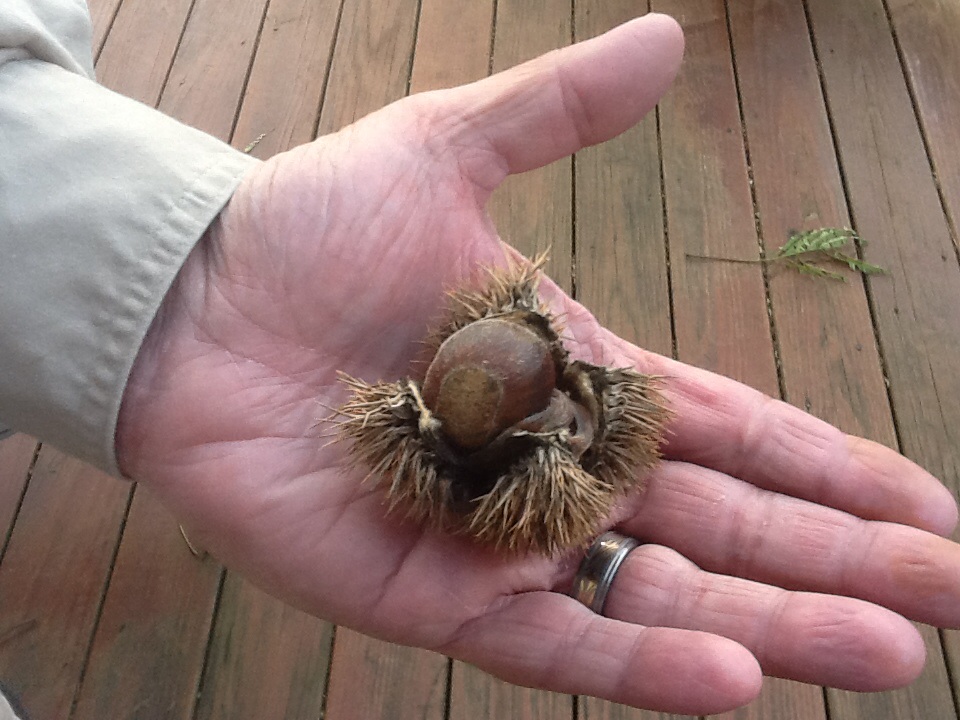
Ha! I beat the squirrels to this one!
Most people have heard the Christmas song about Chestnuts roasting over an open fire, but very few people seem to have actually partaken of this treat. Once a very prolific species, the American Chestnut, was mostly wiped out by a fungus known as the chestnut blight.
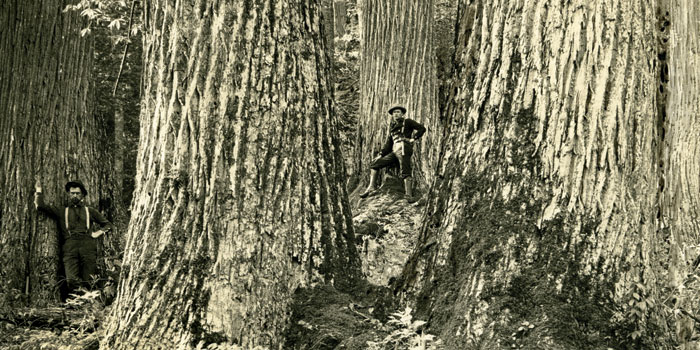
American Chestnut prior to Chestnut blight
Asian varieties, resistant to the blight, are mostly what we see grown today. There is however an effort to bring back the American chestnut in a blight resistant form.
Chestnut, in the genus Castanea, grows in climate zones 4-8 and needs a chill of 300-750 hours below 45 degrees farenheit. Trees growing from seed can take nearly 20 years to grow to production. Most trees bought from nurseries are grafted varieties. Chestnuts can grow 50-100 feet tall.
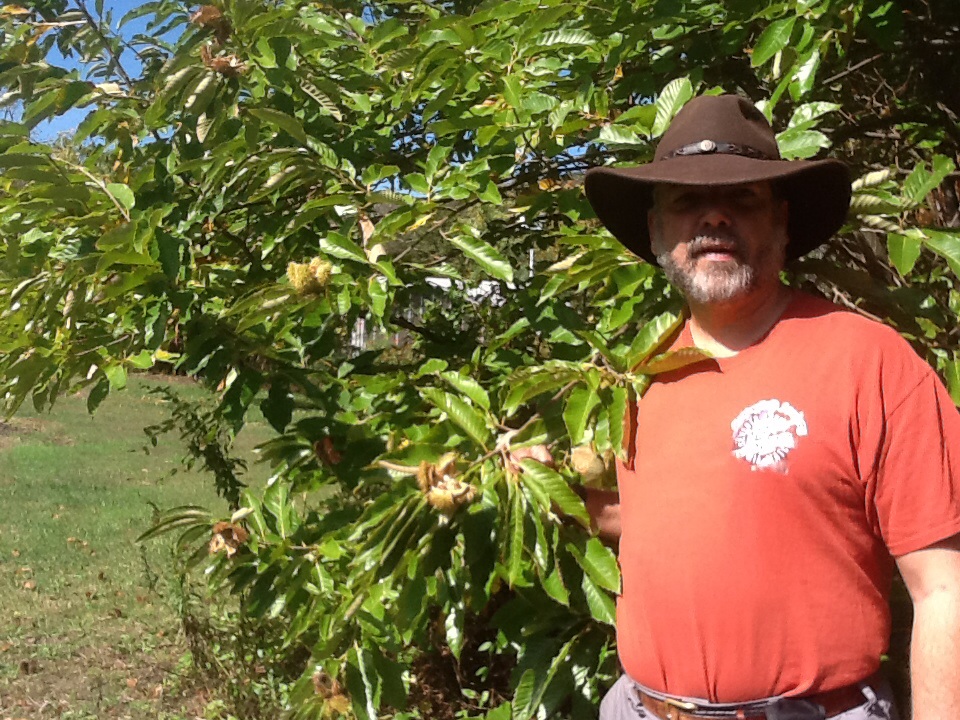
The author with open Chestnut burs
Chestnuts include multiple purposes which include the main purpose of nut production. The lumber from Chestnut is prized for furniture and cabinet making. The trees are also an effective insectary and bring beneficial pollinators to the area in which they are planted.
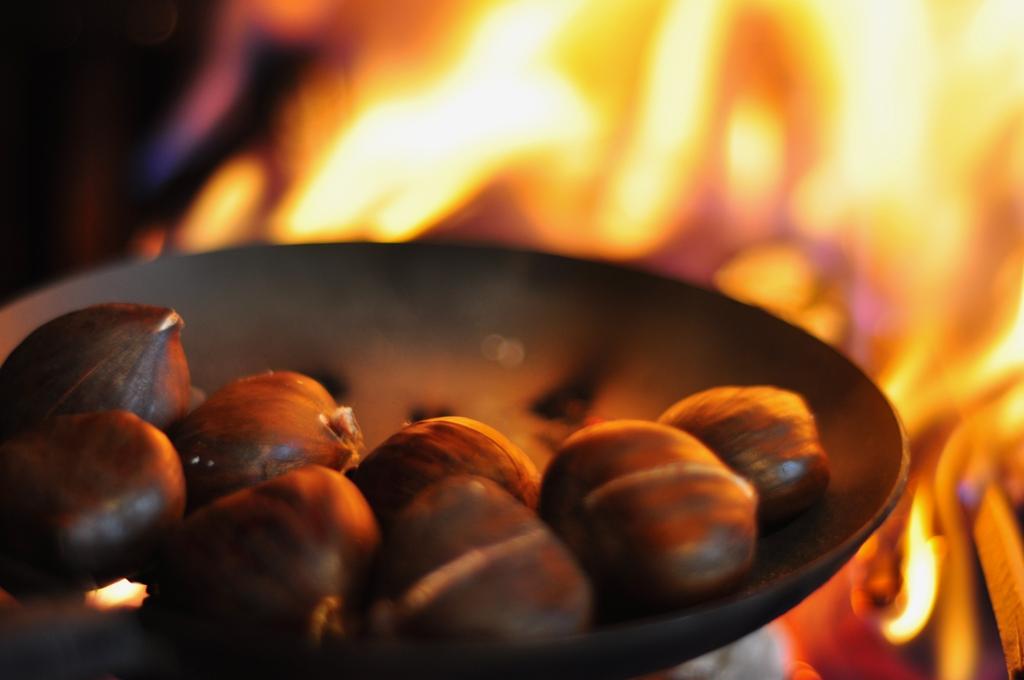
The nuts are quite good to eat and can be used roasted or cooked, made into flour, eaten raw or dehydrated for storage, and processed for the oil content. Chestnuts by mail…


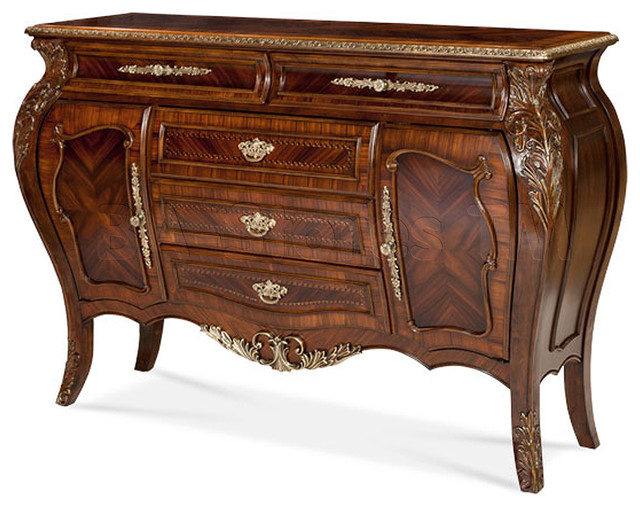
Chestnut buffet
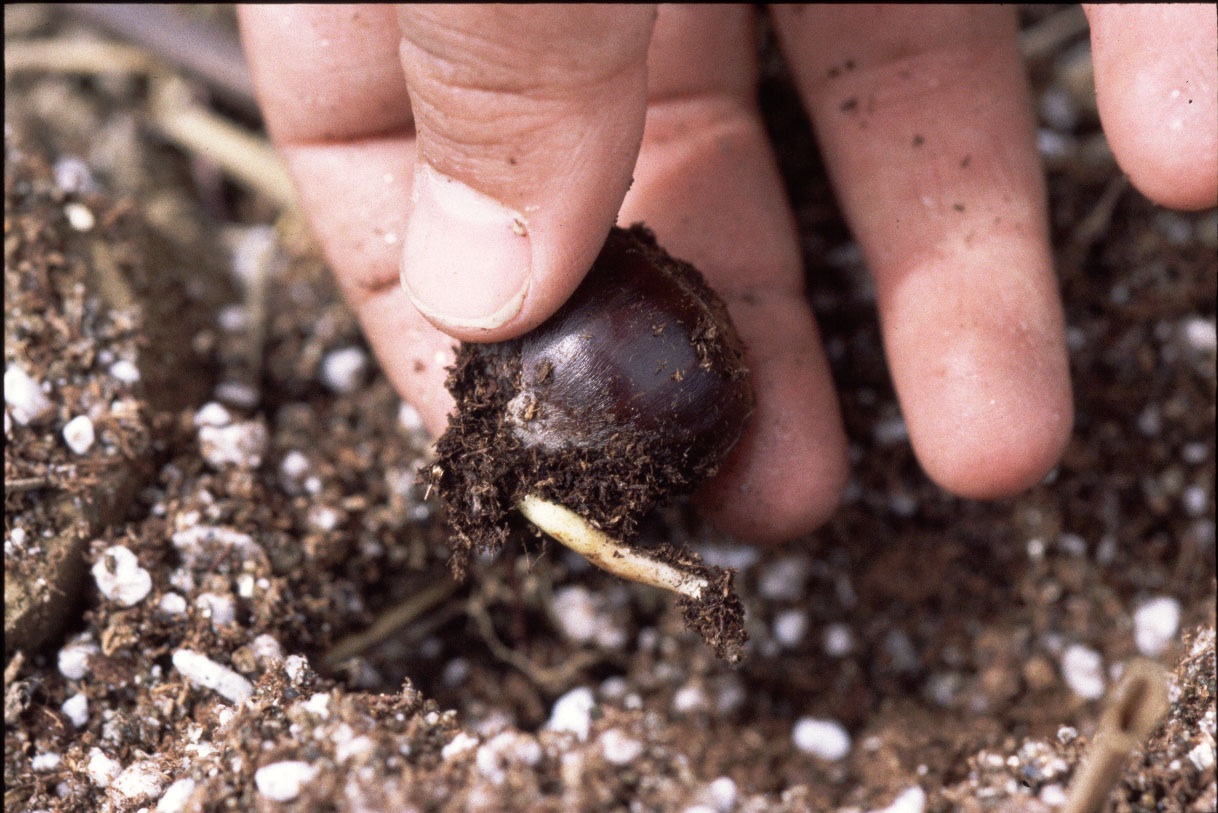
Chestnut beginning to sprout
Chestnuts are ready in the fall and either drop to the ground from their spiny hulls called burs (cupule is the official term) or must be separated from burs fallen with nuts inside. Use thick leather gloves when handling because the spines are quite sharp! No bare feet around the chestnut trees…
A great food forest food producer, Chestnuts are a wonderful addition to any forest garden.